We moeten verifiëren dat uw registratie niet om een geautomatiseerde ingave in ons systeem gaat. Vervolledig aub de onderstaande test...
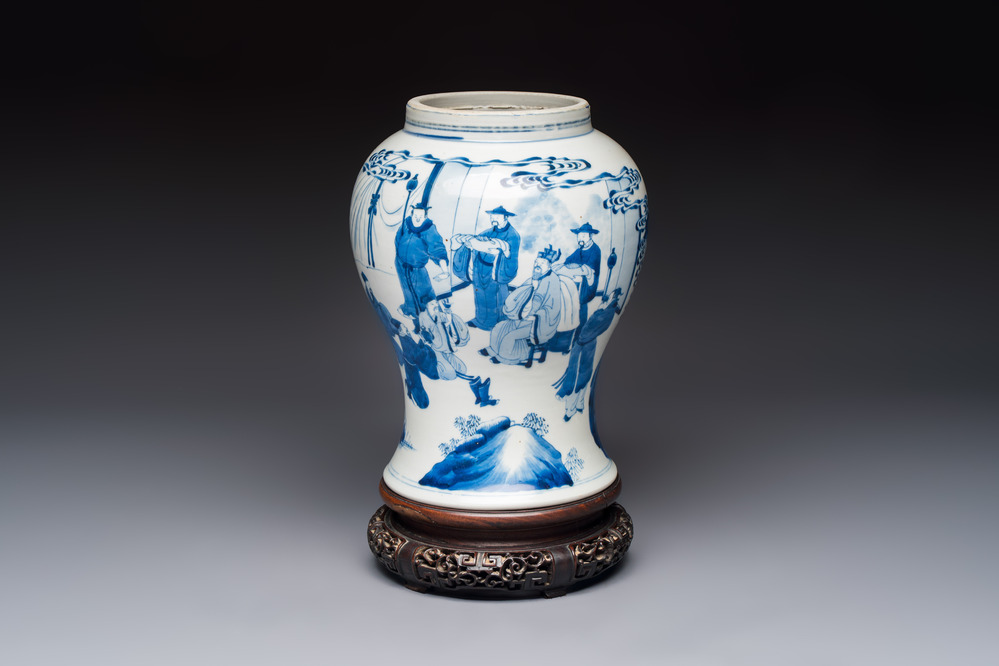
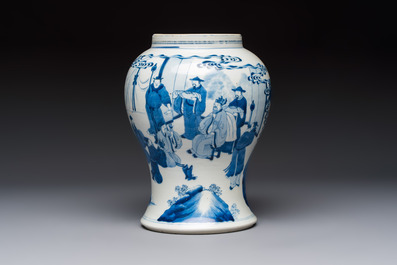
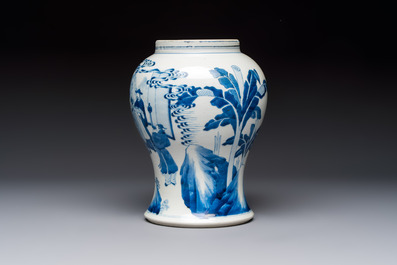
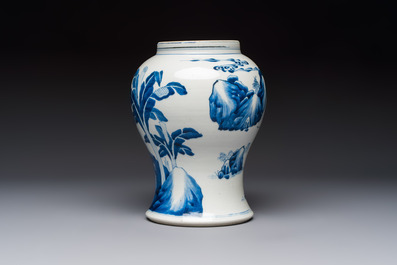
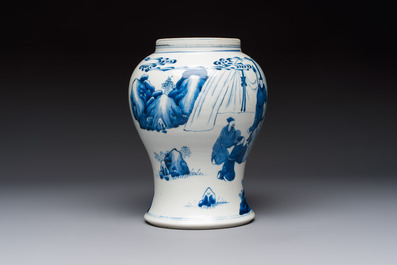
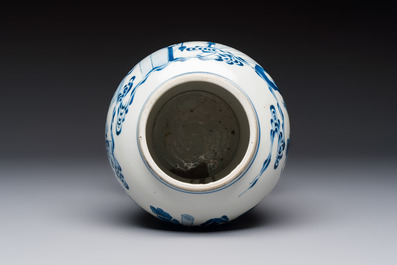
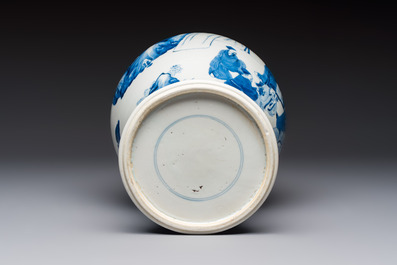
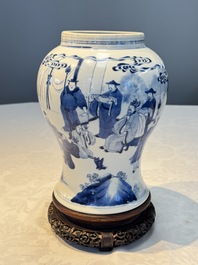
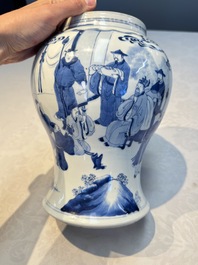
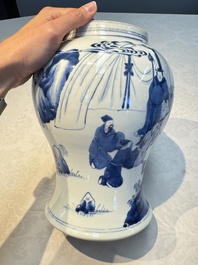
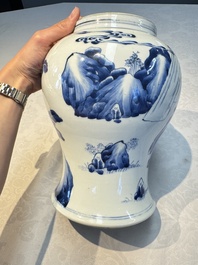
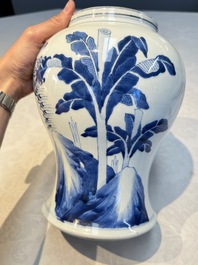
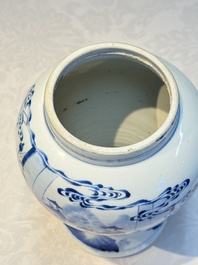
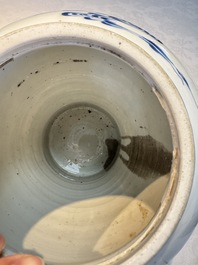
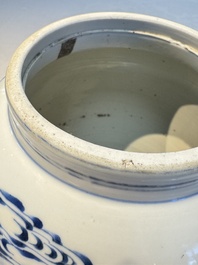
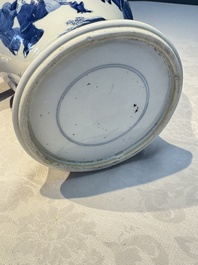
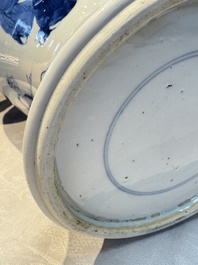
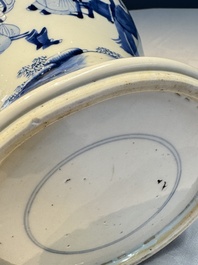
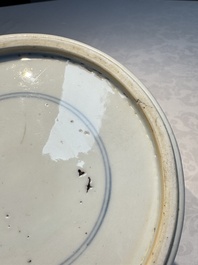
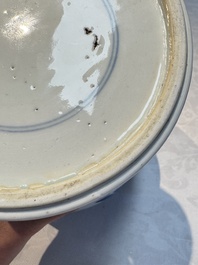
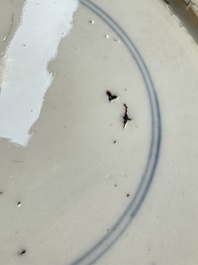
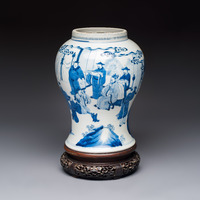
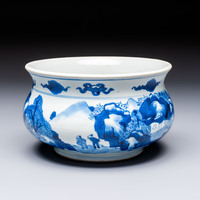
A Chinese blue and white 'Boot-swapping ceremony of Cui Rong' vase, Kangxi
571
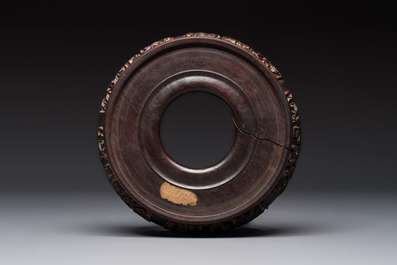
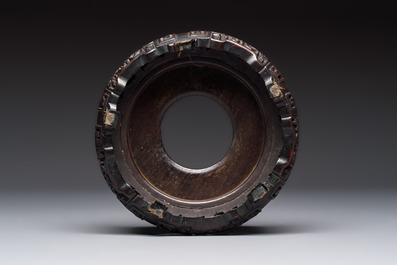
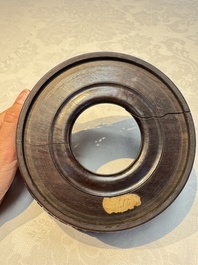
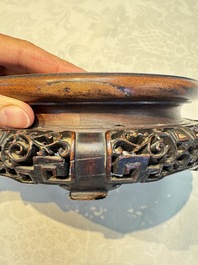
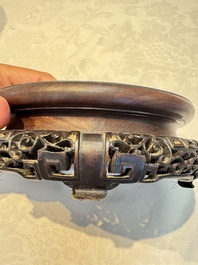
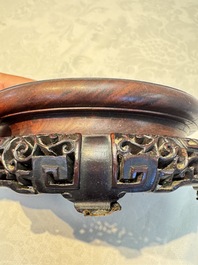
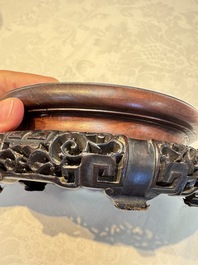
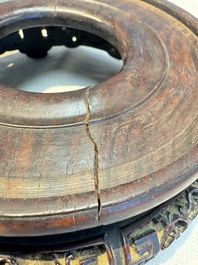
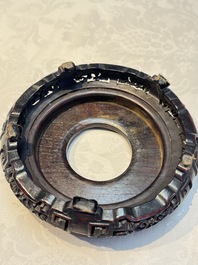
H.: 30,9 cm (incl. stand)
H.: 25,4 cm (excl. stand)
Ref.:
- Tutuhaoyi - A Chinese Art Treasure Trove, for a full description of the scene depicted (link): (op. cit.) The story scene originates from an anecdote dating back to the Tang dynasty (618-907). Cui Rong (崔戎, 780-835) was a statesman important enough to have a position in the ‘Biographies’ section in the official histories The Old Book of Tang (jiu tang shu 旧唐书), completed in 945, and the New Book of Tang (xin tang shu 新唐书), presented to the then emperor in 1060.
When Cui Rong served as the governor of Hua prefecture, his administrative skills and integrity impressed the locals, dignitaries and farmhands alike. One of his notable deeds was that, on his departure, he made sure that a large sum of money which had been allocated for the customary governor’s personal use was to be disseminated among ordinary soldiers of the local army. After hearing the news that Cui Rong had been assigned to a new post, a large number of people swarmed to the departure ceremony trying to prevent him from leaving. During the chaos, Cui Rong’s boots were accidentally removed by some overenthusiastic members of the crowd and they then kept them as a souvenir.
From then on, when a magistrate departed, a group of local dignitaries would come to him with a gift of a new pair of boots in exchange of the boots he had been wearing. They would display his old boots in a public place to show the locals’ appreciation of his legacy. The tradition endured over a millennium till the last days of the imperial China, as was vignetted in the American missionary Chester Holcombe’s (1842-1912) book The Real Chinaman (1895):
‘When a popular official is about to lay down the seal of office at the conclusion of his term of service, he is waited upon by a deputation of leading residents, who, with many flowery words of compliment and praise, gravely request him to donate to the city a pair of his official boots. The request is esteemed an honour, and is always granted. They are taken in solemn procession, with music and much parade, to the city gate and there suspended, where they remain until they decay and drop to pieces.’
The porcelain vessels adorned with this theme were popular in the early Qing period and were deemed to be an apt gift for departing officials to commemorate their highlights in life.
Hamerprijs incl. commissie:
€ 3.900