We moeten verifiëren dat uw registratie niet om een geautomatiseerde ingave in ons systeem gaat. Vervolledig aub de onderstaande test...
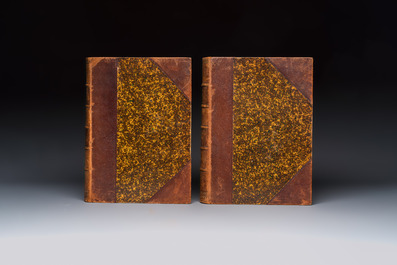
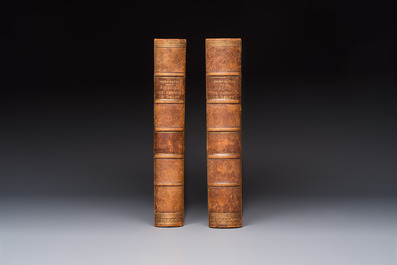
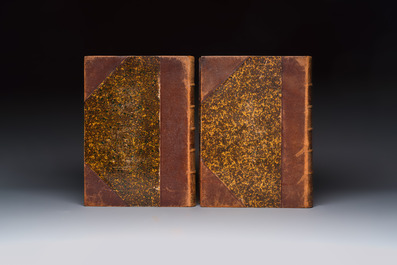
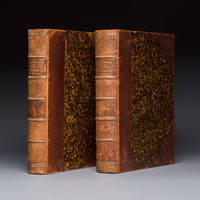
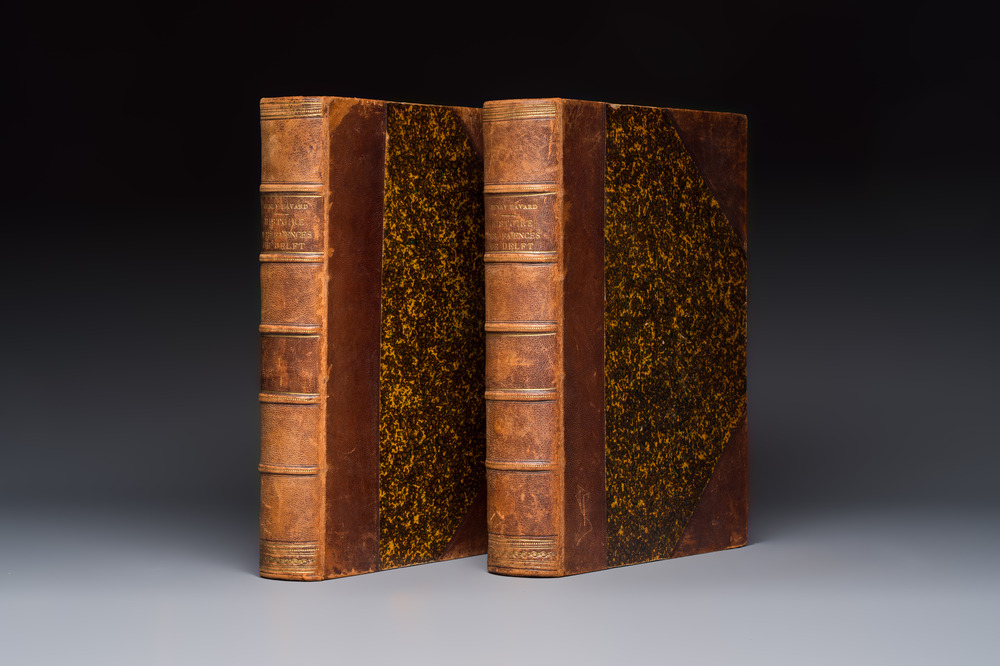
Henry Havard: 'Histoire des Faiences de Delft', two volumes, Amsterdam, 1909
945
Dim.: 33,5 x 25,5 cm (each)
La Céramique Hollandaise, Histoire des Faïences de Delft, Haarlem, Rotterdam, Arnhem, Utrecht, etc., and of the porcelains of Weesp, Loosdrecht, Amsterdam and The Hague.
2 volumes, 258 + [2] + 320 + [4] pp. Bound in three-quarter brown morocco, spine with raised bands.
Illustrated with 35 chromolithographic plates outside the text and more than 500 illustrations within the text.
Volume I contains the history of Delftware and other faience produced in Dutch cities. Volume II provides an overview and biographical accounts of more than 1,000 Dutch manufacturers, pottery makers, etc., including an alphabetical index and a list of all museums and collections from which the author cites or describes objects.
Originally published in Paris by Plon in 1878, and reissued in 1909 in Amsterdam by the publisher ‘Vivat’, expanded with numerous descriptions of additional makers and contributors from other Dutch locations.
Henry HAVARD (Charolles, 5 September 1838 – Paris, 31 October 1921) was a French art historian and writer.
As a commander in the National Guard, he was involved in the Paris Commune. After the suppression of this uprising, Havard was likely condemned to death and fled first to Belgium and then to the Netherlands. In the Netherlands he began writing about art and his travels. After 1877 he returned to France, where he quickly made a career as an inspecteur des Beaux-Arts. Throughout his life he continued to write on Dutch art. In 1878 he published this standard work on Delftware, in collaboration with Leopold Flameng and Charles Goutzwiller. Havard died in Paris in 1921.
Hamerprijs incl. commissie:
€ 84,50