We moeten verifiëren dat uw registratie niet om een geautomatiseerde ingave in ons systeem gaat. Vervolledig aub de onderstaande test...
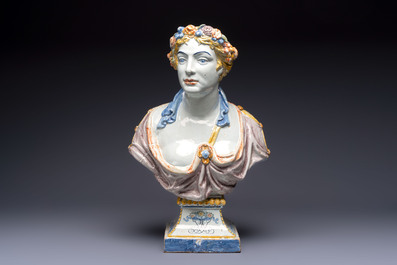
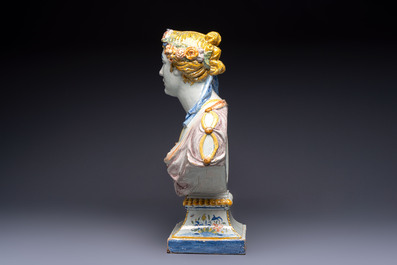
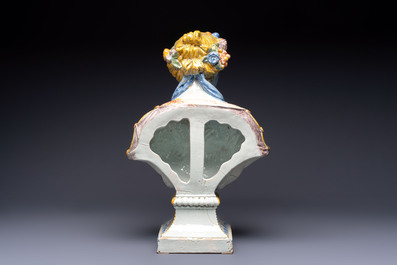
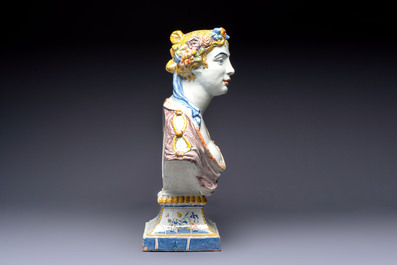
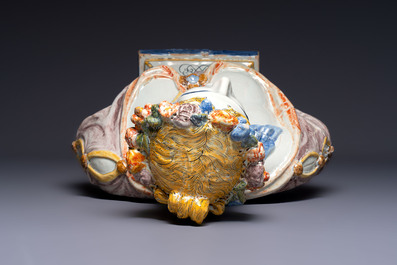
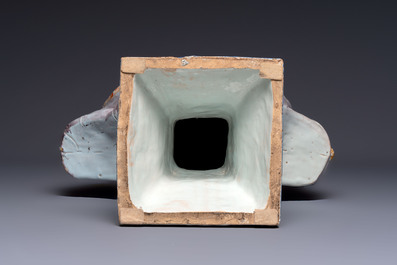
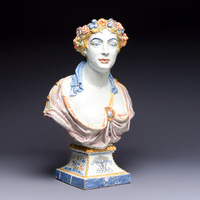
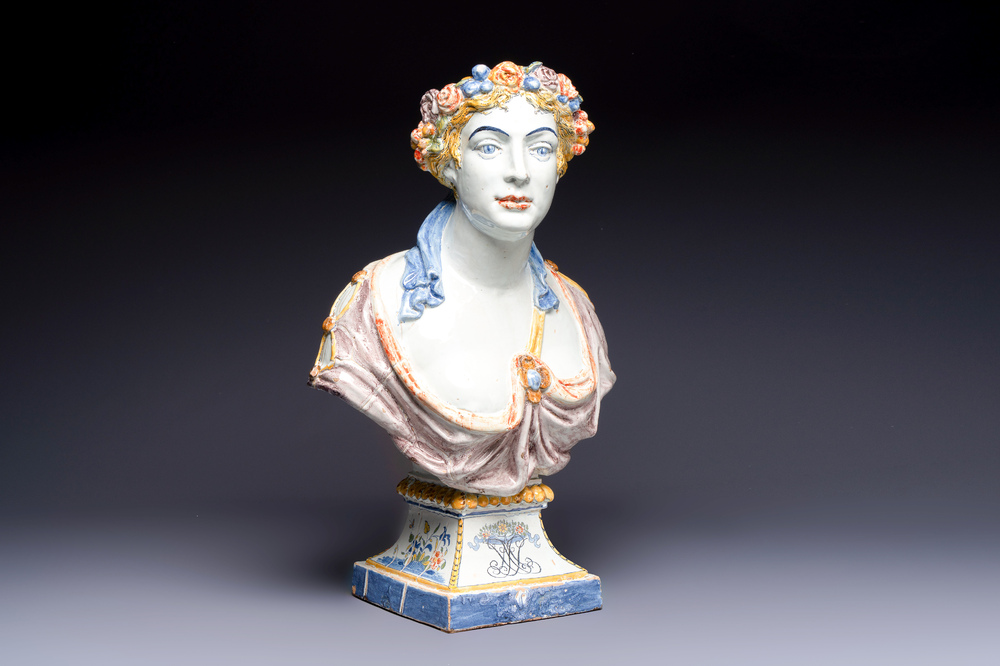
A large polychrome French faience monogrammed bust of a woman emblematic of spring, probably Rouen, early 19th C.
817
H.: 71 cm
Originally conceived in ca. 1730 by Nicolas Fouquay in Rouen, the set of four allegorical busts emblematic of the seasons, is one of the ceramic highlights in the Louvre (link). A fifth example, depicting Apollo, is in the Musée de la Céramique de Rouen (link). A number of later examples are spread across various museums, and the current example is part of this group of 19th C. creations by followers of Fouquay.
Ref.:
- Palais des Beaux-Arts, Lille, inventory no. C. 2129, for a related large bust of Ceres, emblematic of summer, attributed to Rouen and dated to the 18th C., with distinctive features closely resembling our example, such as the thin finish on the red-glazed sections, the rigid eyebrows and the visible baking flaws. (link)
- The Victoria and Albert Museum, London, Accession number C.2-1927, for a related large bust of a woman, emblematic of autumn, attributed to Rouen, marked M.P. inside the base and inconclusively dated to both the 18th and 19th C. (link)
- Château de Sceaux, for a set of busts by Edmé Samson, late 19th C., all marked for the Samson workshop and some inscribed 'Faict à Rouen'. (link)