Nous devons vérifier que votre inscription n'est pas une entrée automatique. Veuillez s'il vous plaît compléter le test suivant:
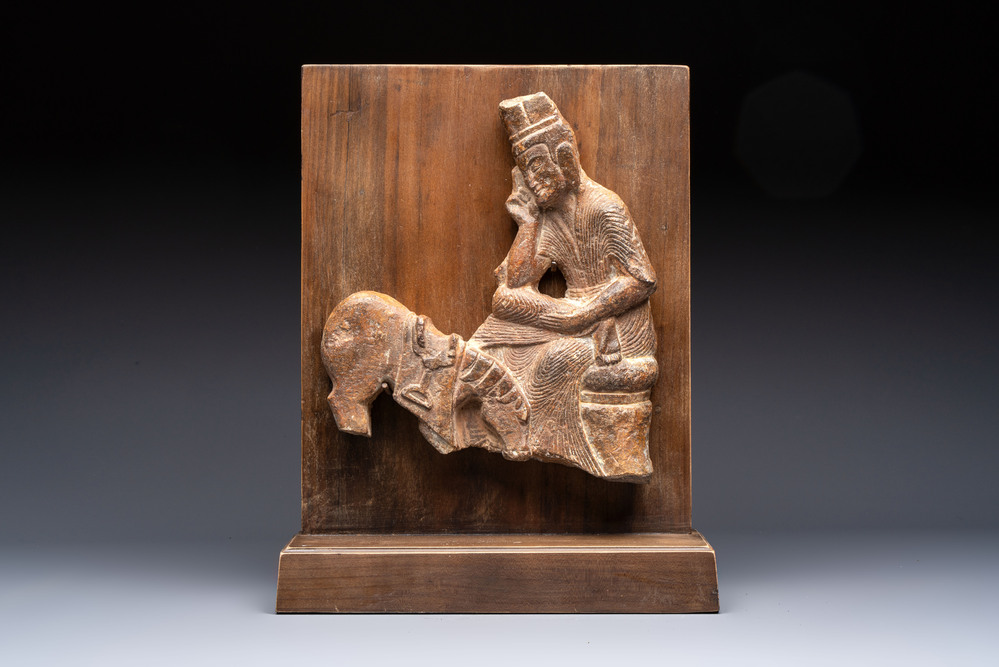
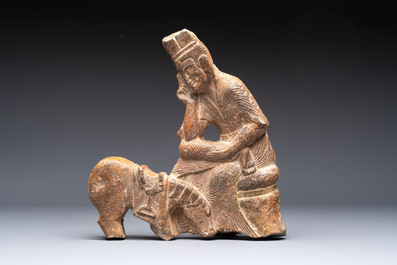
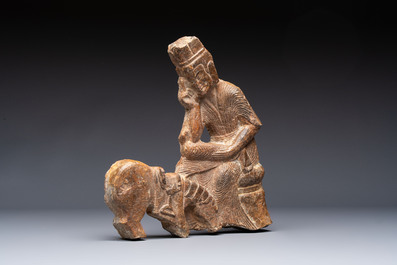
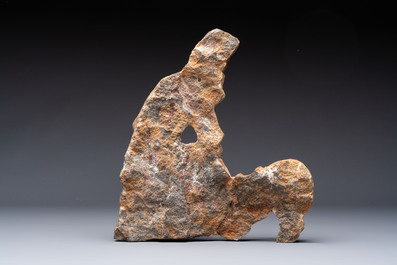
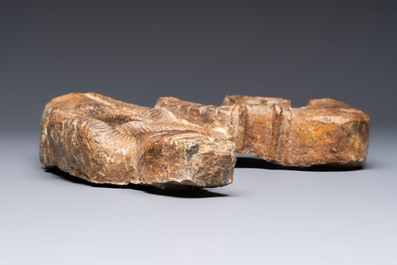
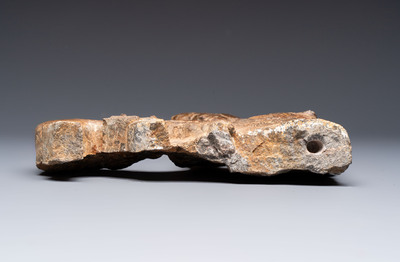
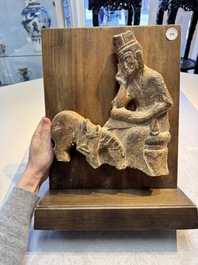
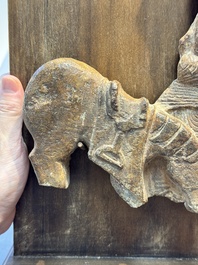
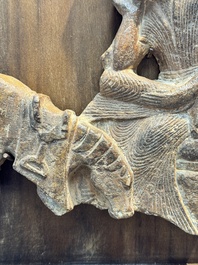
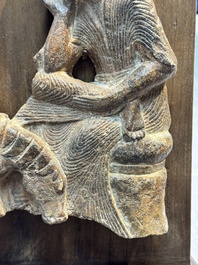
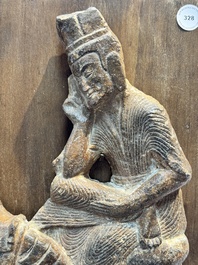
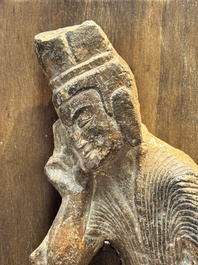
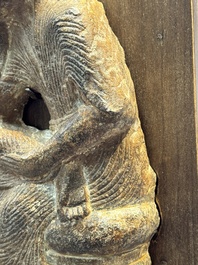
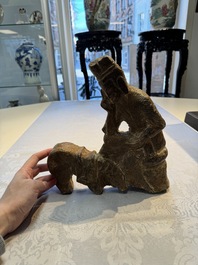
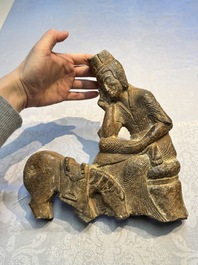
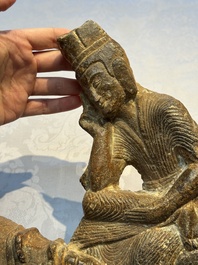
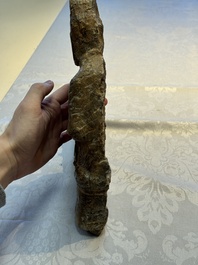
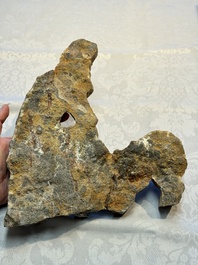
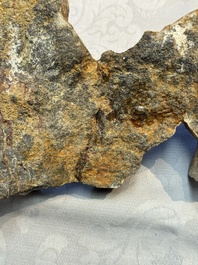
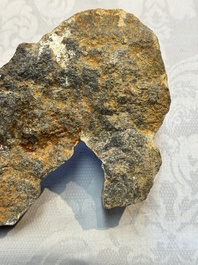
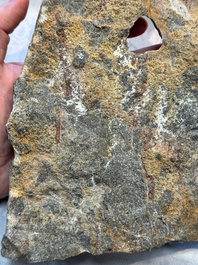
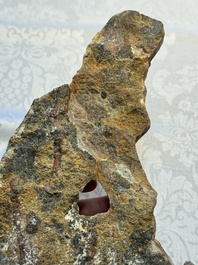
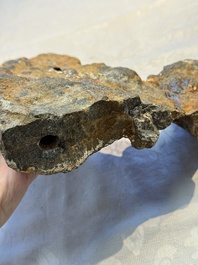
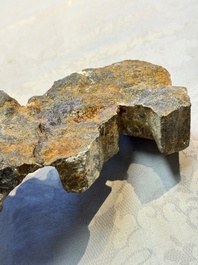
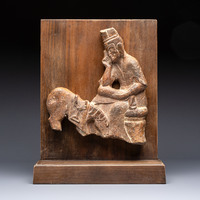
A Chinese sandstone 'Bai Ma Shi Zu 白馬舐足' carving, Northern Wei
328
Ce lot a été vendu le 2025-12-16 et n'est plus disponible
Dim.: 33 x 13 x 42 cm (the stand)
Dim.: 26,5 x 29 x 5 cm (the sculpture)
White Horse Licking the Prince’s Feet
This depiction of the “White Horse Licking the Feet” scene first appeared in The Sutra on the Auspicious Signs of the Prince’s Birth (Taizi Ruiying Benqi Jing), translated by Zhi Qian during the Eastern Wu period. The text describes that after the prince left the city, “he removed his jeweled crown and the garments upon his body, entrusting them to his charioteer. Then the white horse bent its knees, licked his feet, and its tears fell like strings of pearls.”
The story recounts how Prince Siddhārtha (Śākyamuni Buddha) resolved to seek a path to free all beings from the suffering of birth, aging, sickness, and death. Riding his beloved horse Kanthaka, he leapt over the city walls and entered the forest of ascetic practice. Surrounded by the tranquil natural world, he felt a profound sense of peace and joy. Dismounting, he reflected on the countless sorrows of human existence and firmly resolved to part from his servant and his loyal horse.
He instructed his attendant and the white horse to return to the palace, while he continued alone in search of liberation. At that moment, “the white horse Kanthaka, upon hearing that he was to be sent back, bent his knees, licked the prince’s feet, and his tears fell like rain.” Overcome with sorrow, the faithful horse knelt and licked the Buddha’s feet, reluctant to leave. Seeing Kanthaka’s grief, the prince gently stroked his horse and said: “Kanthaka, do not be sad. I am deeply grateful to you. Until now, you have borne all the toils of a noble steed and served me faithfully. From this moment, you shall be freed from the cycles of suffering, and in the future you will surely receive a blessed rebirth.”
此造像為“白馬舐足”,最早出現在東吳支謙所譯的《太子瑞應本起經》,描繪了太子出城後,“即脫寶冠及著身衣,悉付車匿。於是白馬,屈膝舐足,淚如連珠。”
這個故事的大意,是說釋迦太子(釋迦牟尼佛)目睹了人世間生老病死的苦難後,發誓要尋找幫助人們擺脫塵世苦難的出路。他駕騎愛馬「犍陟」逾城來到苦行林中,在寂靜的大自然環境中,心生頓感悅歡喜,下馬回想到樁樁人世間不堪回首的煩惱,下定決心離開僕人與愛馬。
他吩咐僕人與白馬返回宮中,單獨尋求解脫之路。此時,白馬“犍陟既聞被遣,屈膝舐足淚落如雨”,白馬聽聞太子欲將其遣返回宮,當即屈膝跪地親舐佛足,依依惜別不忍離去。太子看見白馬如此悲痛,用柔軟的手撫摸著白馬說道:“犍陟!請你不要悲傷,我非常感謝你,到現在,你已為我竭盡良馬的勞苦。犍陟!你從此將會免除惡道輪迴,將來你必定有好的果報。”
Ref.:
- Portland Art Museum, Portland, accession no. 55.190, for a comparable example. (link)
Adjudication frais incl.:
€ 11.050