We have to double-check your registration and make sure this is not an automated entry in our system. Please complete the test below...
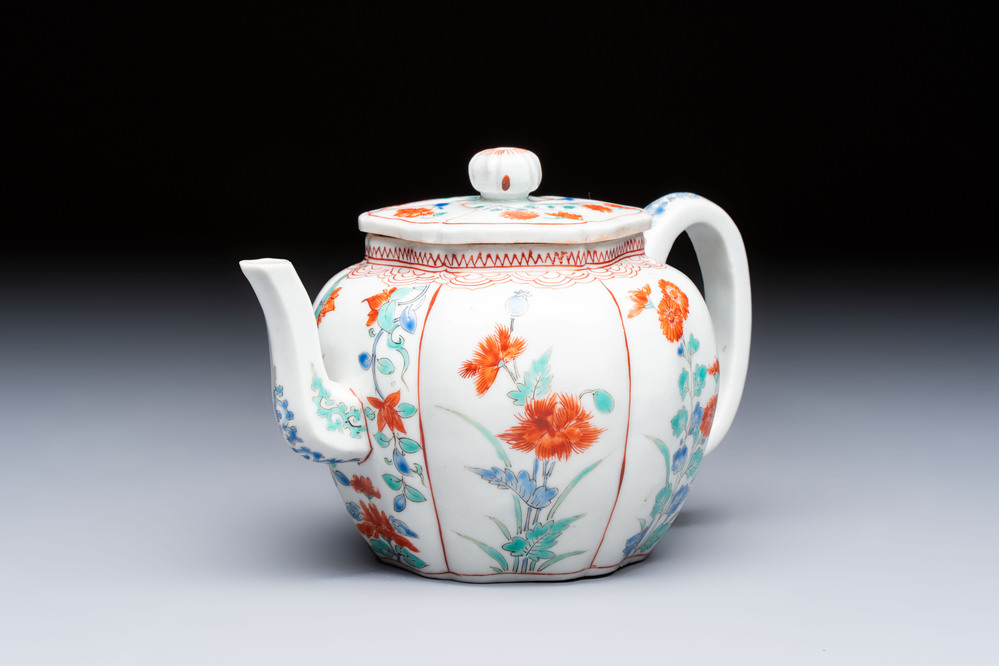
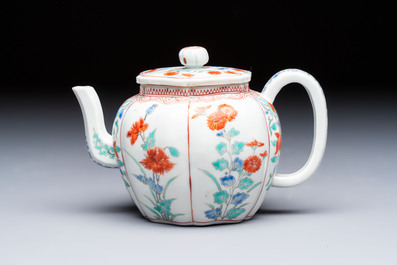
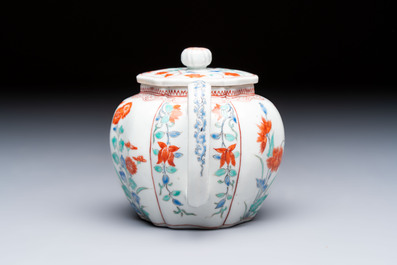
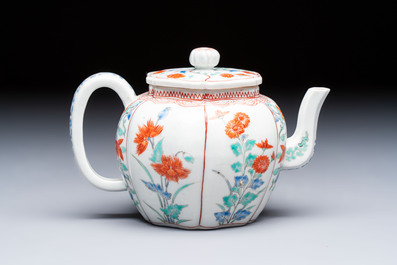
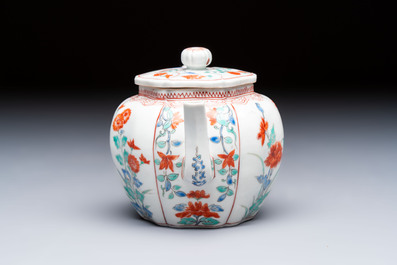
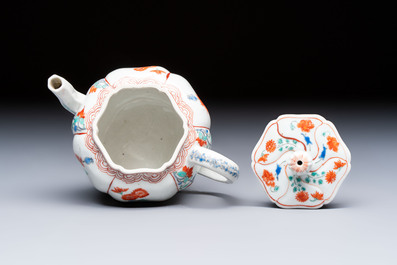
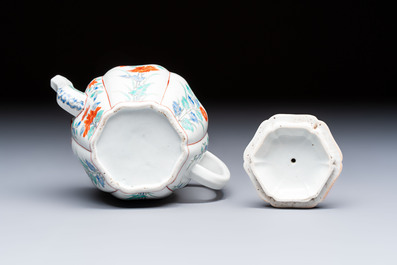
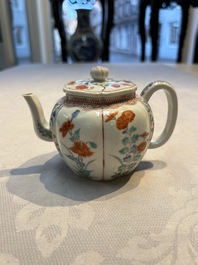
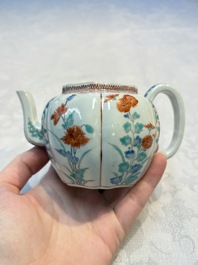
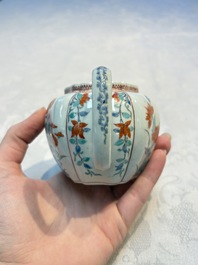
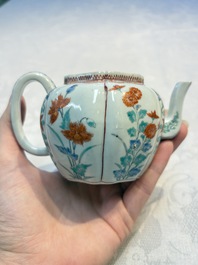
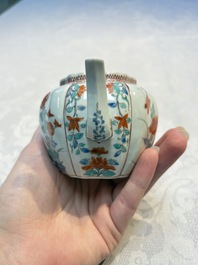
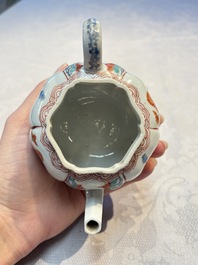
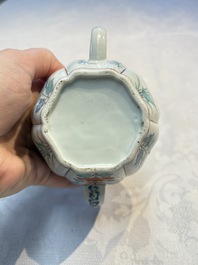
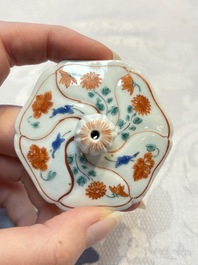
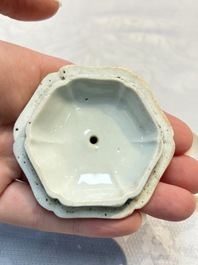
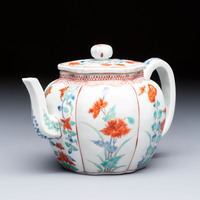
A Japanese Kakiemon teapot and cover, Edo, late 17th C.
189
This lot was sold on 2025-12-16 and is no longer available
L.: 13,5 cm - H.: 9,2 cm (incl. cover)
Ref.: The Chitra Collection, London, accession no. 186, for a very similar example. (link)
The Japanese potter Sakaida Kakiemon I is credited with perfecting the method of using overglaze enamel decoration on porcelain, known as ‘Akae’. The Kakiemon kiln, in the Japanese town of Arita on the southern island of Kyushu, was founded in around 1670 and specialised in the production of wares such as this teapot, that were typically decorated with a yellow, red, blue and turquoise palette set against a milky-white ground. After the fall of the Chinese Ming dynasty in 1644, Dutch traders began to import Kakiemon porcelain to Europe where it became extremely fashionable. This eventually led to the imitation of Kakiemon patterns onto cheaper white porcelain produced in Europe, namely at the Chantilly, Chelsea and Meissen porcelain manufactories. This teapot was formerly in the collection of the Princes Oettingen-Wallerstein, Southern Germany.
Condition report:
(UV-checked)- In excellent condition, with minor normal superficial wear.
品相報告:(已用紫外線光檢查)
- 全品,表面自然磨損痕跡。
Price incl. premium:
€ 5.460