We have to double-check your registration and make sure this is not an automated entry in our system. Please complete the test below...
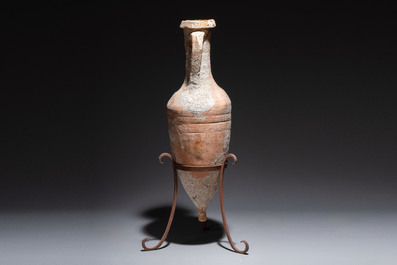
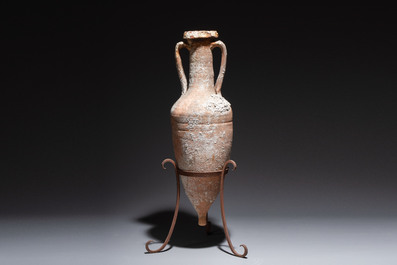
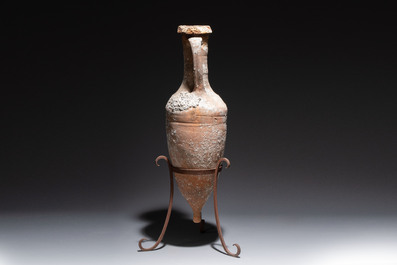
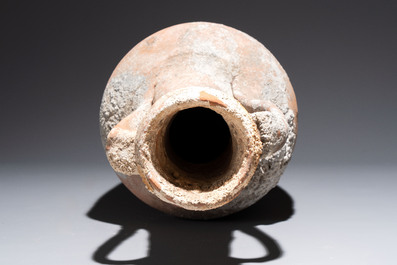
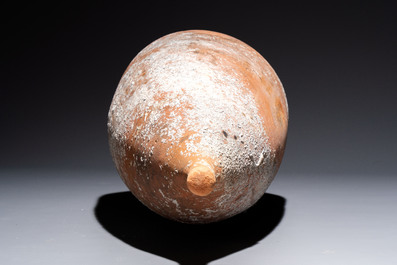
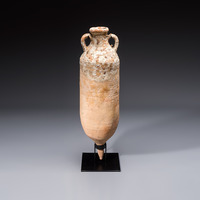
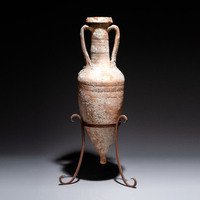
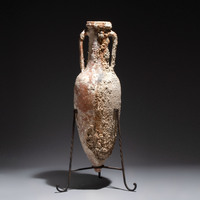
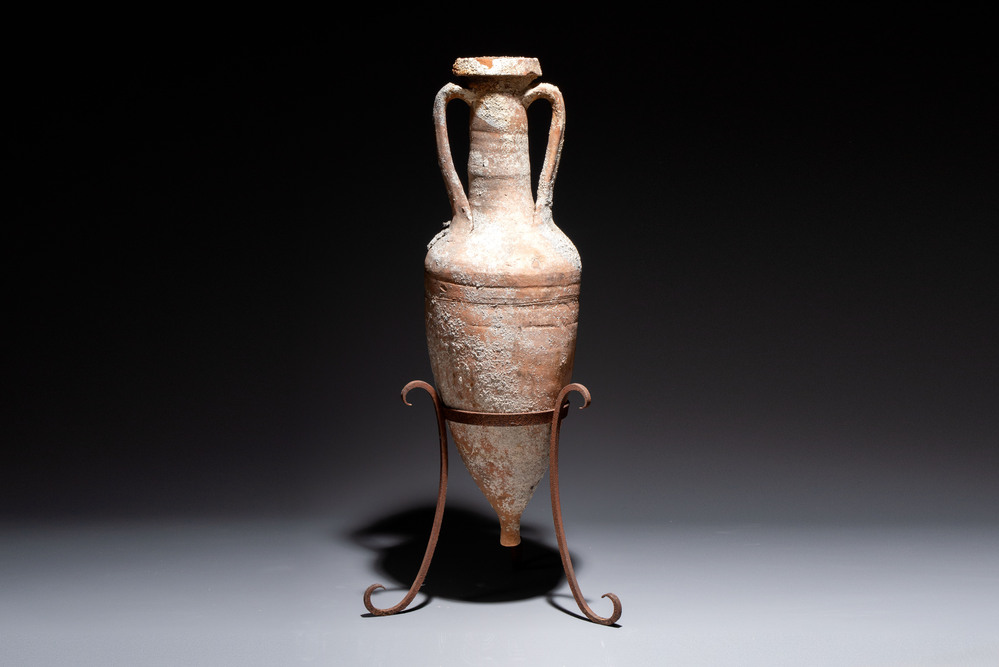
A Roman pottery wine transport amphora with marine encrustation, 2nd C. B.C./1st C.
715
H.: 104,5 cm (incl. stand)
H.: 94,5 cm (excl. stand)
Can be classified in the Dressel typology under number 1, likely of Northern Adriatic origin, diffused to Rome and the Mediterranean area.
Provenance:
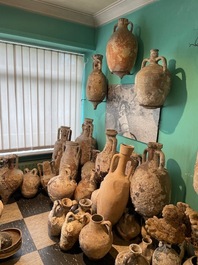
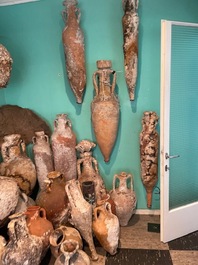
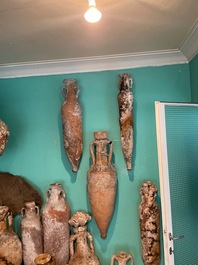
- Part of an important Belgian private collection. Surfaced by the father of the owners upon several boating and diving excursions along the coast of Croatia, Albania and Greece, in the early 1960's. The entire collection, on display, is shown in the images.
Context note:
Shipwreck amphorae are ancient ceramic jars that serve as "time capsules" for underwater archaeologists. These durable containers were the standard shipping units of the Mediterranean for over 3,000 years, used by civilizations like the Canaanites, Greeks, Romans, and Byzantines to transport essential goods such as wine, olive oil, and grain. Because ceramics do not decay in saltwater like wood or metal, they often remain the most visible and abundant evidence of a sunken vessel centuries later.
Shipwreck discoveries:
Fiscardo Wreck (Kefalonia, Greece): Discovered in 2019, this 35-meter Roman ship carried an estimated 6,000 amphorae dating back to between 100 BC and 100 AD.
Albenga Wreck (Italy): One of the largest known Roman cargo ships, it was estimated to hold about 10,000 amphorae primarily used for wine.
Canaanite Wreck (Israel): Found 90 km offshore at a depth of 1.8 km, this 3,300-year-old ship is one of the oldest ever found, proving ancient mariners could navigate the open sea without a sightline to the coast.
Ses Fontanelles (Mallorca): A 4th-C. wreck notable for its sealed amphorae featuring painted inscriptions and Christian symbols, likely carrying garum (fermented fish sauce)
Archaeological significance:
Each amphora style corresponds to specific regions and time periods, allowing researchers to map ancient trade networks, sealed jars have been found to contain olive seeds, fish bones, or even 1,100-year-old olive oil and wine residues, offering a rare glimpse into the diet of ancient civilizations.
Price incl. premium:
€ 1.950